Bus Fever - Car Parking Jam
- 4.6
- Rating
- 1.00M
- Installs
- Free
- Price

 Analysis by App-foxy
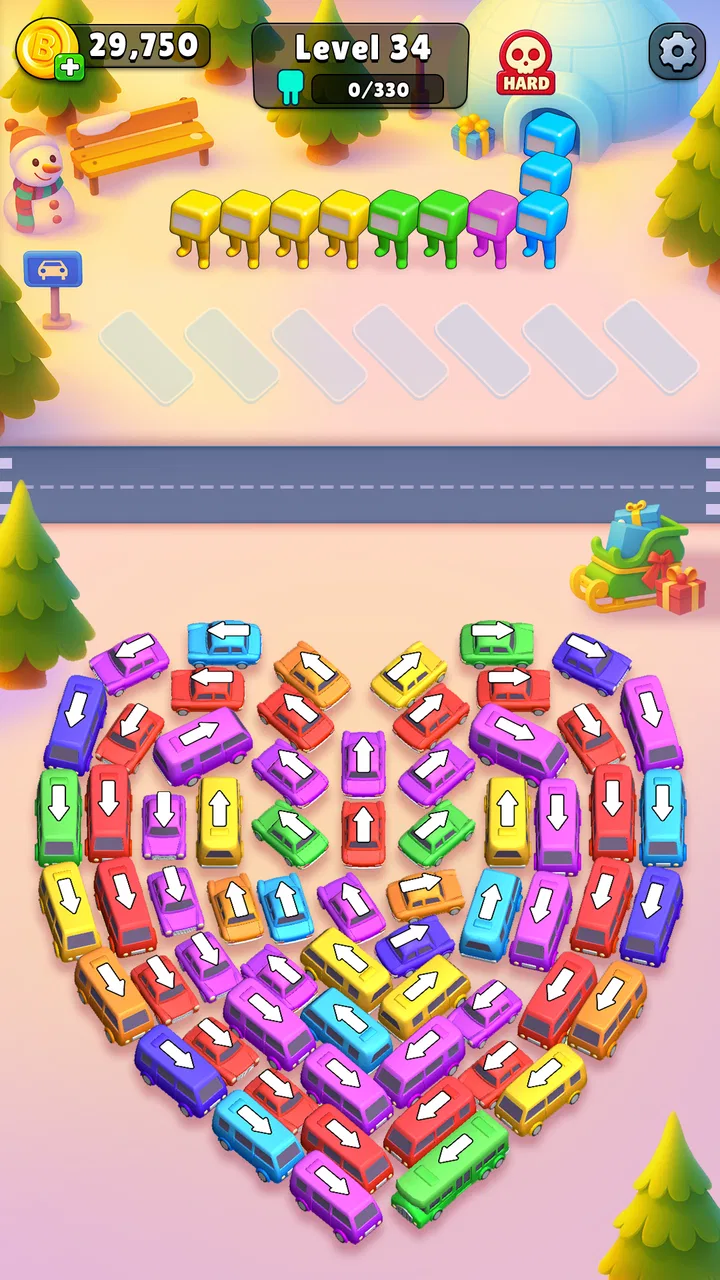
I spent time with Bus Fever as a quick puzzle game, and my first impression was easy to understand: it turns a crowded traffic scene into a sequence of small decisions. The aim is to clear the jam and get buses moving, but the appeal is less about speed than about noticing the order in which vehicles need to leave. That makes it a natural fit for short breaks, waiting rooms, commutes, or any moment when I want something more engaging than scrolling without committing to a long session.
It is a free puzzle game from Microjoy Games, available for Everyone and compatible with Android 6.0 or later. The game has passed 1M+ installs and holds a 4.6 average from roughly 39K ratings, which suggests that its simple traffic-jam idea has reached a broad audience. I would not treat popularity as proof that it will suit everyone, though. The important question is whether the central puzzle remains satisfying after the first few days of novelty.
Why the first week feels so approachable
The strongest part of the opening experience is how quickly the basic objective becomes readable. I do not need a long explanation to understand that a blocked road must be untangled and that careless movement can leave the board in an awkward state. That clarity matters on a phone, where a puzzle that requires too much setup can feel like work before the fun begins.
You May Also Like

 Blood Strike: 2.5 Anniversary
Blood Strike’s Loadouts Turn Every Drop Into a Tactical Gamble
A close look at Blood Strike’s custom loadouts: how fast access to signature weapons reshapes its battle royale rhythm, rewards preparation, and narrows the gap between fights.

 Pandora - Music & Podcasts
Pandora’s Music Is Easy to Start, but Harder to Recover
Pandora’s strength is its low-effort path from a seed to a station. Its weak spot is how much confidence it asks you to place in connection, setup, and quiet recovery.

 8 Ball Pool
 Is Built on Rivalries, Rematches, and Routine
A close look at the rivalries, rematches, shared routines, and unanswered safety questions that turn a quick pool match into a persistent mobile community.

 Samsung Music
’s Quiet Strength Is Playing What You Already Own
Its reach comes less from spectacle than from dependable access to a personal library. That simplicity is both the app’s strongest retention engine and its ceiling.

 AccuWeather: Weather Radar
AccuWeather Review: A Quick, Clear Forecast for Everyday Decisions
For everyday plans, the best forecast is the one you can understand quickly. AccuWeather makes rain timing, radar, and local conditions easy to act on, with a few trade-offs.

 Hill Climb Racing
Why Hill Climb Racing Still Turns Crashes Into One More Run
A tiny car, a bumpy hill and one more upgrade: Hill Climb Racing keeps resurfacing because its simple chaos makes every near-miss feel personal.
More From Our News Desk



My preferred way to play is in small bursts. I can open it while waiting for a coffee, solve a few traffic layouts, and put the phone away without feeling that I have abandoned a story or interrupted a complicated campaign. The individual puzzle format also makes it easier to stop after a frustrating attempt and return later with a clearer head.
The early appeal comes from the contrast between an apparently chaotic road and the orderly solution hidden inside it. At first, I tend to look for the vehicle that seems easiest to move. After a few attempts, I start reading the whole arrangement instead: which bus is blocking another, which exit needs to stay available, and which move will create space rather than merely shift the problem. That change in perspective gives the game more substance than its short description suggests.
A useful habit is to pause before making the first move. I look for the vehicles that have an unobstructed route and mentally trace what happens if they leave. This prevents the common mistake of moving something simply because it can move. In a traffic puzzle, an available move is not always a useful move, and recognizing that distinction is where the early learning happens.
The touch controls are best approached with deliberate taps rather than hurried swipes. When the board looks busy, I find that rushing makes me lose track of the new spaces created after each move. Taking a second to reassess keeps the puzzle feeling logical instead of turning it into trial and error.
A practical routine for short sessions
For a realistic everyday scenario, I would use Bus Fever during a ten-minute wait before an appointment. I could play without sound, work through a small number of boards, and stop as soon as my name is called. It does not demand the continuous attention of a competitive match, and there is no need to remember a complex plot. That makes it more convenient than many action games when my concentration is available only in fragments.
It is also a reasonable choice for someone who enjoys visual organization puzzles but does not want the arithmetic of a traditional match-three game. Instead of building combinations or chasing a timer, I am mainly planning movement and preserving room. Players who enjoy untangling cables, sorting objects, or solving sliding-style arrangements may recognize the same satisfaction here, even though the traffic theme gives the board a more animated purpose.
Parents should still remember that an Everyone rating describes the intended age suitability, not necessarily the ideal play pattern for every child. The puzzle can be a gentle exercise in sequencing, but whether it works for a younger player depends on patience, reading ability, and comfort with repeated attempts. I would introduce it as a shared problem-solving activity rather than assume every child will enjoy solving it alone.
What makes the puzzle more thoughtful than it looks
The most useful strategic insight is to distinguish between freeing a vehicle and improving the board. A move that sends one bus toward an exit may feel productive, yet it can also remove the space needed to release another vehicle. I try to prioritize moves that open several future options. This is a small adjustment, but it reduces random experimentation and makes successful solutions feel earned.
Another helpful approach is to treat the puzzle as a sequence of temporary parking decisions. Rather than asking only which bus should leave first, I ask where the remaining vehicles will sit afterward. That forward-looking question is especially valuable when the layout becomes dense. It turns the game from a reaction test into a compact planning exercise.
I also recommend separating a genuine mistake from a merely unfamiliar position. If the board still offers several sensible routes, I continue instead of restarting immediately. Sometimes the best solution becomes visible only after a move changes the spacing. Restarting too quickly can hide that lesson and encourage dependence on guessing.
Does it keep earning a place on the phone?
I judge a small puzzle by whether it fits naturally into spare moments, not by how long it can hold my attention in one sitting. Here, I’d use a brief pause to revisit a traffic layout and test a more deliberate order of moves, rather than treating every session as a push for progress. That makes the question of lasting value personal: it depends on whether this focused kind of thinking remains enjoyable for you.
The difference between a good first week and lasting value
The first week is where the concept has its greatest advantage. The traffic-jam theme is instantly understandable, the puzzles are easy to approach, and the short-session format removes much of the friction found in larger games. I can see why someone might install it on a whim and keep returning for several days.
Longer-term value depends on whether I enjoy the act of solving more than the surrounding presentation. If I like compact logic challenges, the basic loop has a dependable use: it gives me something to focus on when I want mental activity without a large time commitment. If I need a story, character progression, social competition, or a constantly changing set of mechanics, the same simplicity may start to feel narrow.
That is the central trade-off. The game’s accessibility is also its limitation. It does not ask me to learn a large system, but it may not provide enough variety for players who quickly need new goals. I would keep it installed as a casual puzzle tool, not as my only game.
The free entry point helps with that decision. I can try the core experience without paying upfront, which is useful for a game whose appeal is personal and rhythm-based. In-app purchases range from $0.99 to $99.99 per item, so I would be careful around optional spending, especially if I am using the game as a frequent boredom cure. A small purchase can feel harmless in isolation, while repeated convenience spending can change the value calculation over time.
My advice is to decide in advance whether the free experience already gives enough enjoyment. If it does, there is no reason to treat purchases as part of the normal cost of playing. If progress ever feels slower than I want, I would first take a break or change my solving approach rather than pay automatically. That keeps the game in its proper role: a casual puzzle, not a recurring expense.
How it compares with familiar puzzle alternatives
Compared with match-three games, Bus Fever is less about creating a chain reaction and more about preserving a workable order. That makes it calmer for me, but also less immediately rewarding when I want bright effects and rapid feedback. A match-three game is usually better for players who enjoy quick pattern recognition; this one is better for players who like planning several moves ahead.
Compared with classic sliding puzzles, the traffic setting gives the objective more context. I am not just moving pieces toward an abstract arrangement; I am trying to resolve a road blockage. The trade-off is that a traditional sliding puzzle can feel more purely mathematical, while this game may feel more dependent on the specific visual layout and the rhythm of its presentation.
Compared with large strategy games, it is far easier to start and stop. There are no long build cycles or complicated resource plans competing for my attention. That convenience comes at the cost of depth. Someone looking for a game that develops a broad strategy over weeks should choose a deeper alternative, while someone wanting a focused mental reset may prefer this smaller format.
Where repetition can begin to wear me down
The main source of fatigue is the possibility that the same traffic-clearing idea may stop feeling fresh once I have internalized its basic logic. Even when individual layouts differ, the emotional shape of a session can remain similar: inspect the jam, identify a safe order, move vehicles, and recover from a blocked route. That loop is pleasant when I want consistency, but it can become predictable when I am looking for surprise.
Another point of friction is the cost of failure in a crowded arrangement. A single poor decision can make the rest of the board harder to read, and recovering may require patience rather than cleverness. I do not mind restarting occasionally, but frequent resets can make the game feel less like a flowing puzzle and more like a search for the correct opening sequence.
There is also a difference between difficulty and opacity. A challenging board gives me enough information to reason my way forward. A tiring board is one where I keep testing moves because I cannot see which earlier choice caused the problem. When I reach that point, I find it better to stop for a few minutes than to keep tapping. The short-session design works in the game’s favor here because walking away is easy.
Maintenance, updates, and the habit question
The current version is 1.19.4, and the game was released on October 30, 2024. Those details matter less than how the experience fits into a routine. A casual puzzle earns lasting space when I can return to it without relearning everything, without needing a large block of free time, and without feeling pressured to turn every session into progress.
For me, the best maintenance plan is simple: keep it as an occasional mental break and avoid making it the default response to every idle moment. Playing it only when I genuinely want a traffic puzzle helps preserve the satisfaction of solving. If I open it automatically whenever I am bored, the familiar loop can become background noise rather than a rewarding activity.
I would also keep an eye on the practical side of free-to-play design. The game costs nothing to download, but the listed purchase range means that spending can scale well beyond a token amount. I would not recommend it to someone who is trying to avoid all optional purchase prompts or who tends to spend impulsively in casual games. For those players, a paid puzzle with a clear one-time price may offer better peace of mind, even if it has fewer sessions available.
The game is a better long-term companion for people who value convenience over breadth. It can fill a narrow but useful role: a lightweight logic challenge that is ready whenever I have a few spare minutes. It is not trying to replace a full puzzle collection, and I would not judge it by that standard.
Who should install it, and who should skip it
I would recommend it to players who enjoy traffic puzzles, spatial planning, and short attempts that can be paused mentally between everyday tasks. It is particularly suitable if you like discovering the correct order of actions rather than reacting quickly. The Everyone rating also makes it approachable for a broad audience, provided the player is comfortable with repeated problem solving.
I would be more cautious about recommending it to anyone who needs strong long-term variety. If your ideal mobile game includes a substantial narrative, deep customization, multiplayer rivalry, or a wide range of unrelated puzzle types, this may feel too focused. Likewise, players who dislike restarting after a bad sequence may find dense boards irritating rather than satisfying.
It is also not my first choice when I want a completely purchase-free experience. The free download is a useful way to test the concept, but the presence of in-app items means I would approach it with a clear spending boundary. That is not a deal-breaker, but it is part of the decision for anyone building a carefully controlled phone setup.
My long-term verdict
Bus Fever earns a place on my phone as a focused, low-commitment puzzle rather than a permanent main game. Its strongest quality is the clean mental task: read the jam, plan the order, create space, and learn from a bad move. The developer, Microjoy Games, has chosen a concept that is easy to understand but still gives careful players room to improve their way of thinking.
After the novelty fades, the game’s value rests on habit. I can see myself returning when I want a quiet challenge during a short wait, especially because I do not need to remember a story or prepare for a long session. I would not expect the same excitement months later if I needed constant novelty, but I would keep it available as a reliable puzzle break.
My final recommendation is therefore selective but positive: try it if the idea of untangling a crowded road sounds satisfying, and give yourself time to learn the difference between a legal move and a useful one. Skip it if you want a broad, evolving game system or a guaranteed one-time-cost experience. For the right player, its modest scope is not a weakness; it is exactly what makes the game easy to return to when a few spare minutes need a little structure.
FAQs for Bus Fever - Car Parking Jam
01What is Bus Fever - Car Parking Jam?
Bus Fever - Car Parking Jam is a casual puzzle game focused on organizing traffic and freeing vehicles from crowded parking areas. You must carefully move buses and cars in the correct order, avoid blocking the exits, and help passengers reach their destinations. The game combines simple tap controls with increasingly challenging parking and traffic-management puzzles.
02How do you play Bus Fever - Car Parking Jam?
Gameplay is based on selecting vehicles and guiding them out of a congested parking area. The main challenge is deciding which bus or car should move first, because one incorrect move can block other vehicles or create a traffic jam. As levels progress, you may encounter tighter spaces, more vehicles, and layouts that require planning several moves ahead.
03Is Bus Fever - Car Parking Jam suitable for children?
The game is generally easy to understand and does not require advanced reading or complicated controls, making it suitable for many younger players. However, parents should review the app’s age rating, advertising, and in-app purchase settings before allowing children to play. Difficulty can also increase quickly, so younger users may occasionally need help solving later levels.
04Does Bus Fever - Car Parking Jam require an internet connection?
Basic puzzle gameplay may be available without a constant internet connection, which makes the game convenient for short sessions while traveling or when mobile data is unavailable. Nevertheless, certain features such as advertisements, rewards, updates, events, or purchases may require connectivity. Availability can vary by version and device, so checking the app’s current store description is recommended.
05Are there ads or in-app purchases in Bus Fever - Car Parking Jam?
Like many free-to-download casual puzzle games, Bus Fever - Car Parking Jam may include advertising and optional in-app purchases. Ads can sometimes provide extra rewards or appear between levels, while purchases may offer coins, boosts, or other conveniences. Before downloading, review the store listing and configure purchase restrictions if the game will be used by children.
Pros
- Simple controls make the parking-jam puzzles easy to pick up.
- Short levels are convenient for quick play sessions.
- Increasing traffic creates a satisfying sense of progression.
- Bright visuals make cars and obstacles easy to distinguish.
- Offline play is useful when traveling without an internet connection.
Cons
- Some levels can feel repetitive after extended play.
- Difficulty may rise suddenly in later parking challenges.
- Frequent ads can interrupt the flow between levels.
- Limited variety in objectives may reduce long-term appeal.
- Touch controls can feel imprecise in crowded parking areas.

Bus Fever - Car Parking Jam
Gallery